Wire mesh metals and alloys
The metals and alloys we weave and weld into mesh, and the stainless steel grades, with what each one is chosen for.
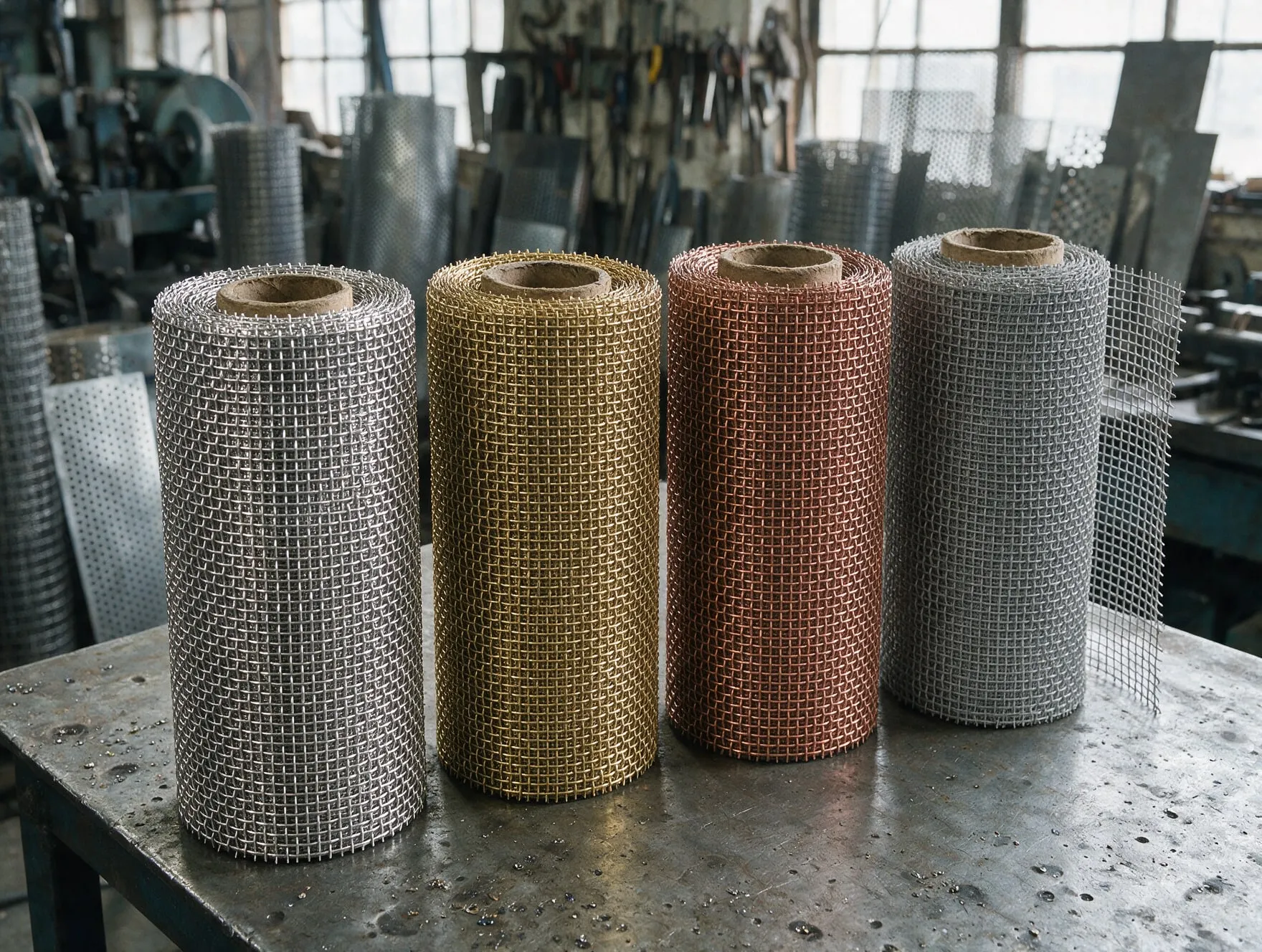
14 metals and alloys
- Stainless steel
- An alloy of iron with chromium, with nickel and molybdenum added for formability and corrosion resistance. It resists corrosion, fire and heat, cleans easily and can be recycled.
- 49 products
- Aluminium
- The most popular non-ferrous metal. Its alloys add copper, magnesium, manganese or silicon; magnesium makes the alloy hard and resists corrosion in marine air.
- 20 products
- Brass
- An alloy of 60 to 70% copper and 30 to 40% zinc. It beats copper for abrasion resistance and tensile strength, but conducts electricity far less well.
- 20 products
- Bronze
- Mostly copper, and brownish red. Commercial bronze wire mesh is 90% copper and 10% zinc. It resists corrosion and fatigue and conducts electricity well.
- 14 products
- Copper
- Ductile and malleable, with high thermal and electrical conductivity. It resists atmospheric corrosion and grows a thin green patina, but nitric acid, cyanides and ammonia compounds attack it.
- 18 products
- Hastelloy
- A corrosion resistant alloy that work hardens faster than the austenitic stainless steels. It keeps its corrosion resistance at high temperature and tolerates abrasion, pressure and stress.
- 16 products
- Inconel
- A nickel-chromium alloy, with aluminium or molybdenum added to suit the grade. It resists heat and corrosion and goes on working after long use.
- 17 products
- Mild steel
- Low carbon steel, also called black cloth. It is strong, tough, magnetic and readily welded, and comes plain or galvanised for industrial and domestic use.
- 15 products
- Monel 400
- A nickel-copper alloy that is stronger than unalloyed nickel and resists sea water, acids and alkalis. Common in shipyards, marine work and petroleum plant.
- 12 products
- Nichrome A
- An alloy of nickel and chromium, made as Cr20Ni80, Cr15Ni60 and Cr20Ni35. It is ductile, with high tensile strength and resistance to oxidation and sulphur.
- 12 products
- Nickel
- A silvery-white hard metal that is strong, ductile and resistant to heat and corrosion. Woven from high purity wire, it is favoured for filtering corrosive liquids and gases.
- 14 products
- Titanium
- Light, strong and durable. It resists salt water, chlorides, metallic salts, nitric, chromic and organic acids and dilute alkalis, and is woven in plain and twill weaves.
- 11 products
- Tungsten
- An extremely hard metal with a very high melting point and the smallest thermal expansion of any metal. Used for filtration at high temperature.
- 11 products
11 stainless steel grades
Stainless steel wire mesh- 304
- Austenitic, with 18% chromium and 8% nickel. Resists chemicals, oxidation and corrosion across a wide range of temperatures, and is ductile and easy to form.
- 304L
- Austenitic, with 18% chromium and 8% nickel. It has the same resistance to chemicals, oxidation and corrosion as 304, and forms as easily.
- 309
- Resists fire, heat and corrosion, with high tensile strength and impact resistance. It is easy to form and to clean, and needs little maintenance.
- 310
- 25% chromium and 20% nickel. Resists oxidation, sulphur atmospheres containing H2S and moderately carburising atmospheres; also used in cryogenic work.
- 314
- The best high temperature resistance of the chromium-nickel steels. Its silicon content improves its resistance to oxidation and to carburisation.
- 316
- Austenitic, with added molybdenum, so it resists pitting and crevice corrosion in salt water better than 304. It forms and welds well, even with heavy welding.
- 316L
- Austenitic, with added molybdenum. It resists pitting and crevice corrosion in salt water better than 304, and forms and welds as well as 316.
- 321
- Titanium-stabilised austenitic steel. It resists chromium carbide precipitation at high temperature, and is used in chemical processing and oil and gas refineries.
- 330
- An austenitic nickel-iron-chromium alloy with about 36% nickel. It resists oxidation up to 2200°F and stress corrosion cracking in hot environments.
- 347
- Niobium-stabilised austenitic steel. It has higher creep and stress rupture strength than 304, and slightly better oxidation resistance than 321.
- 410
- A general-purpose martensitic steel with 11.5% chromium, heat treated for hardness. Hard wearing, but more open to chemical corrosion and oxidation.
Need help choosing the right mesh?
Talk to our teamRequest a quote
Send a drawing, a sample or a specification and hear back within one day.
Enquiring about